
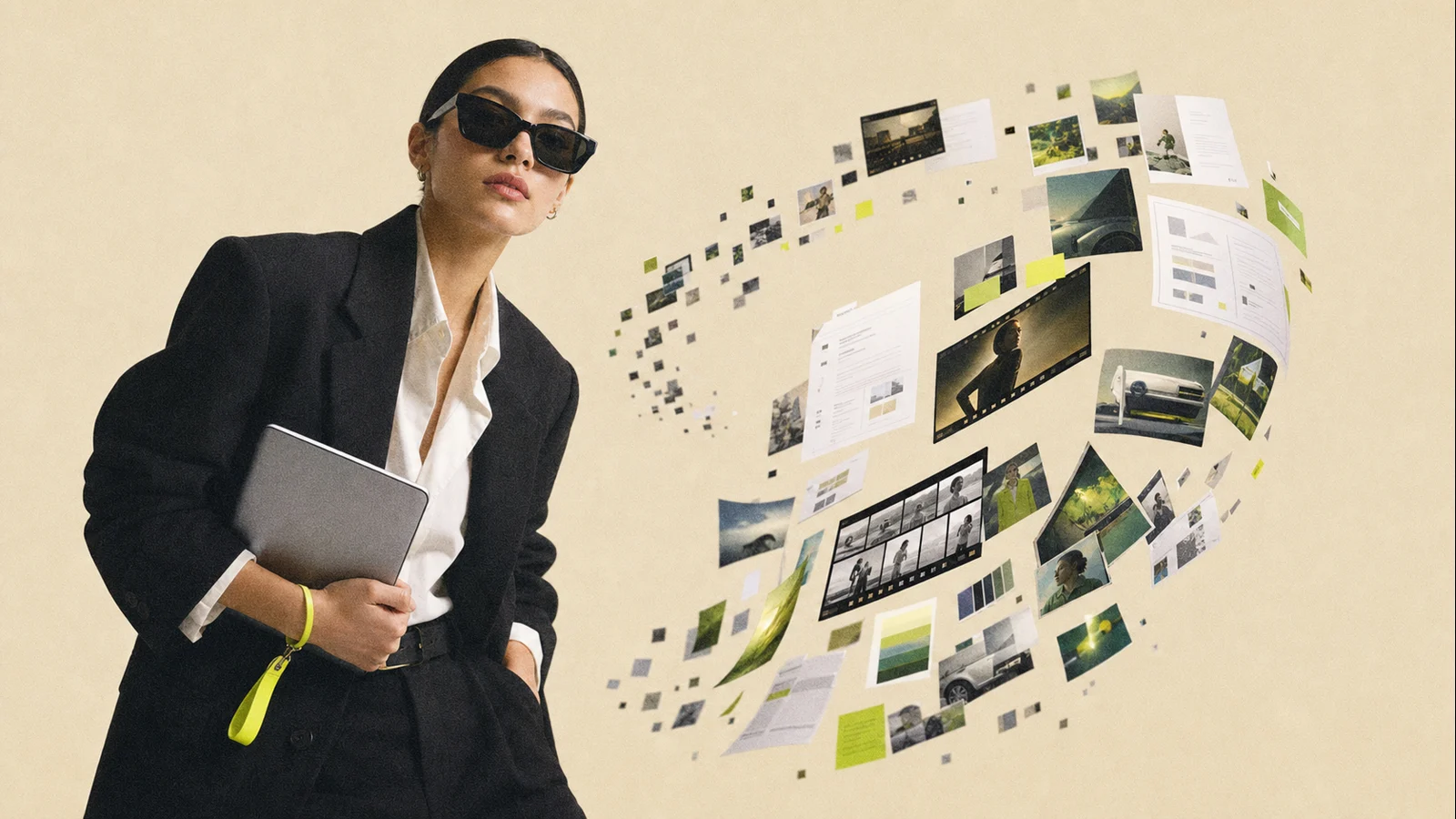

AI does not replace the need for a strong advertising idea. It removes some of the production weight around that idea. The brands that win with AI are not the ones generating the most images. They are the ones giving the work a clear job, a clear world and a clear reason to exist.
An AI advertising studio helps brands create campaign films, product videos, social ads, launch visuals and testable creative directions using AI-assisted production. The important word is not AI. The important word is studio. A good result still needs concept, positioning, art direction, editing, sound, taste and a person who knows when an output is wrong.
This guide is written for founders, marketing teams, agencies and brand managers who are considering AI commercials or AI content production, but do not want the final work to feel cheap, random or disconnected from the brand.
What is an AI advertising studio?
An AI advertising studio is a creative production partner that uses AI image and video tools inside a directed advertising workflow. The studio does not simply type prompts and send raw generations. It shapes the idea, builds a visual system, produces multiple assets, edits the strongest material and prepares final deliverables for the platforms where the campaign will run.
For a brand, that means one team can move from brief to campaign visuals faster than a traditional shoot, while still thinking like a production company: what the viewer sees first, what the product moment is, what the brand should feel like and what action the ad is meant to create.
Simple definition
An AI advertising studio turns a brand brief into directed commercials, social ads and campaign visuals using AI production, editing and classic advertising judgment.
Why brands are starting to use AI for ads
Most brands do not need AI because it is trendy. They need it because the volume and speed of modern content is brutal. A single campaign may need a hero film, cutdowns, vertical social edits, product stills, hooks for paid media, landing page visuals and alternative creative angles. Traditional production can still be the right choice for many hero moments, but it is not always built for that level of iteration.
AI production is useful when the brief needs speed, worldbuilding, multiple versions or visuals that would be expensive to shoot physically. It lets a brand test more directions before committing, create product environments that do not exist yet, or make campaign content when a full shoot would slow the launch down.
Explore multiple visual directions, hooks and formats before choosing the campaign route.
Create cinematic spaces, stylized product moments and campaign atmospheres without building every set physically.
Produce horizontal, vertical and short-form versions around the way people actually watch.
Spend more energy on concept, direction, edit and distribution instead of carrying the full weight of a shoot every time.
What can a brand make with AI advertising production?
The best AI projects are not "AI videos". They are specific business assets. A beauty brand may need a product world for a launch. A fashion brand may need vertical social ads. A beverage brand may need colorful 3D product motion. A course or app may need a high-retention explainer. A music artist may need visuals that feel bigger than the budget.
| Asset | Best use | What matters most |
|---|---|---|
| AI commercials | Brand films, product launches, premium campaign spots. | Concept, pacing, product clarity, edit and sound. |
| AI social ads | Paid media, Reels, TikTok, Shorts and fast campaign testing. | Hook, rhythm, format, first three seconds and clear payoff. |
| AI product videos | Beauty, fashion, drinks, tech, packaging and object-focused launches. | Texture, lighting, scale, product readability and brand world. |
| Campaign visuals | Landing pages, launch pages, thumbnails, paid creative and social packs. | Consistency across assets and a recognizable campaign system. |
| UGC-style AI ads | Testing everyday angles without making the brand look low-effort. | Native pacing, believable moments and enough polish to protect trust. |
The important decision is not whether AI can make the asset. It is whether AI is the right production method for the job. If the campaign needs a real spokesperson, real product handling, legal proof or human testimonial authenticity, traditional production may still be better. If the campaign needs scale, fantasy, speed, stylized motion or many creative routes, AI can be the sharper tool.
The workflow: from brand brief to finished campaign assets
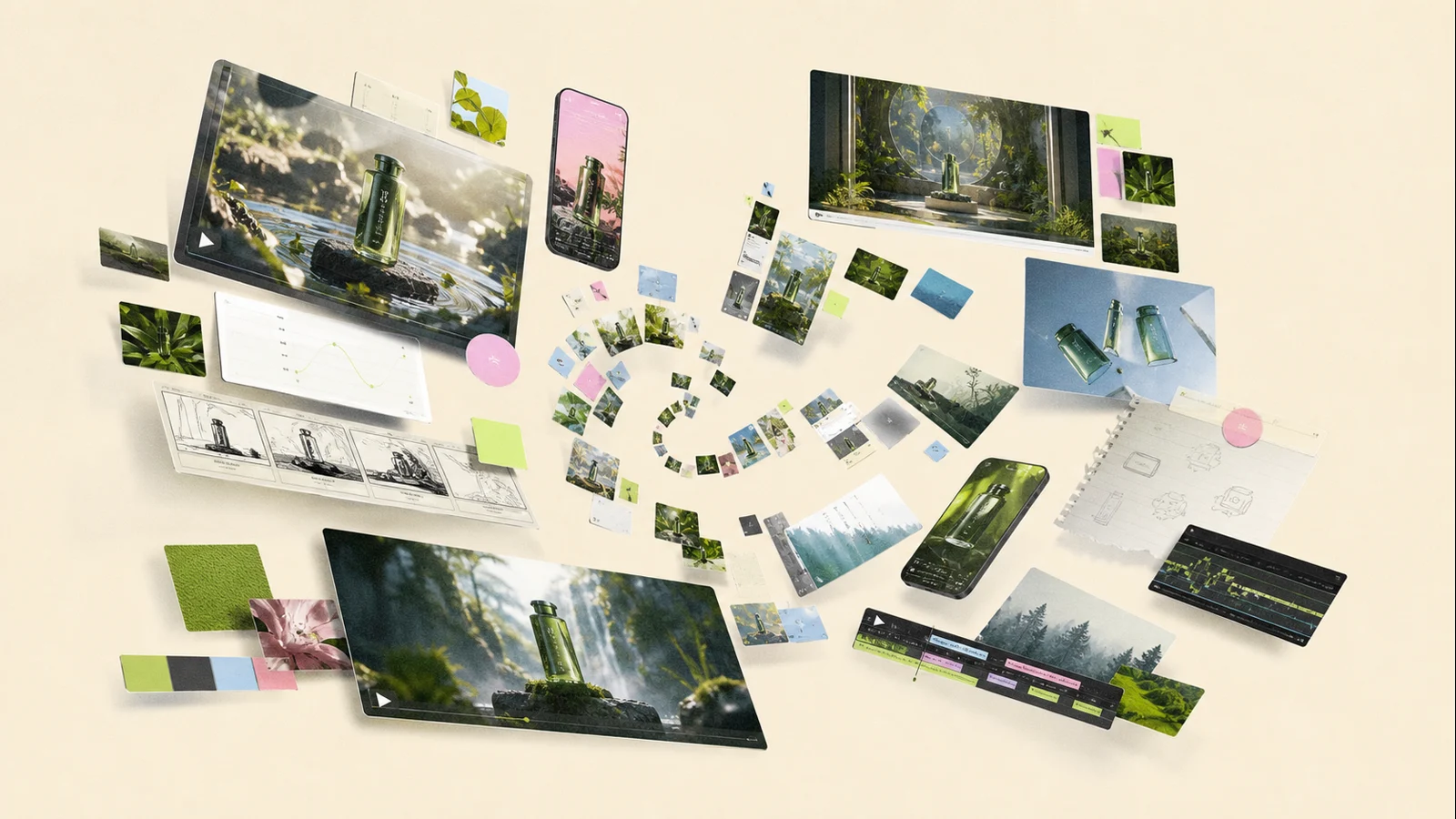
A useful AI advertising workflow starts before the first generation. The brief needs to define the audience, product truth, desired feeling, main claim, formats, media use and brand guardrails. From there, the production can move fast without becoming random.
Define the campaign idea, visual tone, product role, audience and platform needs.
Build references for mood, lighting, composition, materials, wardrobe, props and world rules.
Generate images, video shots and motion tests against the approved direction instead of chasing random outputs.
Select the strongest material, cut for rhythm, polish the image, add sound and prepare final formats.
Export campaign assets for web, paid social, organic social, pitch decks or launch pages.
At Genial Production, we come from advertising, so the AI layer is only one part of the work. The goal is not to show that AI was used. The goal is to make the brand feel sharper, bigger, more current and easier to remember.
AI tool vs AI advertising studio
AI tools are useful. They can generate visuals quickly and help a team explore ideas. But a tool does not know your positioning, your audience, your campaign objective or the difference between something that looks expensive and something that only looks complicated.
A studio brings judgment around the tool. It decides what to make, what to reject, what to refine and how the final work should behave as advertising. That is the difference between output and production.
How to keep AI ads from looking cheap
Cheap AI ads usually fail for the same reasons: the product is unclear, the world changes every shot, the lighting has no taste, the motion feels floaty, the edit has no rhythm or the ad is trying to impress instead of communicate.
The fix is not more prompts. The fix is stronger direction. Before generating, decide what the brand should feel like. Decide what must stay consistent. Decide what the viewer has to understand in the first seconds. Then treat every output like footage from a shoot: keep, reject, refine, edit.
- Lock the brand world. Palette, lighting, texture and visual references need rules.
- Protect the product moment. The viewer should know what is being sold and why it matters.
- Edit for attention. Social ads need rhythm. Commercials need emotional build.
- Use sound seriously. Sound design is often what makes AI video feel finished.
- Export for the platform. A good 16:9 film is not automatically a good vertical ad.
Why Genial Production is a good fit for AI advertising
Genial Production is built for brands that want AI content to feel like advertising, not like a technology demo. We come from campaign thinking, so the starting point is always the brief: what the brand needs to say, who needs to care, where the asset will live and what the viewer should remember.
That matters because AI production can move extremely fast, but speed without taste creates noise. Our role is to turn the speed of AI into a controlled creative process: direction before generation, visual consistency before volume, editing before delivery and platform formats before the final handoff.
The work needs a message, a product moment and a reason to exist before it needs another generation.
References, mood, color, pacing and format rules help the campaign feel coherent across commercials, social ads and stills.
AI footage only becomes brand-ready when the rhythm, image treatment, sound and delivery formats are handled properly.
A launch may need a hero film, vertical cutdowns, social hooks, campaign visuals and thumbnails, all connected by one creative direction.
The Genial Production approach
Use AI to make the brand move faster, but keep human creative direction in charge of what the work means.
How much does AI video production cost?
The honest answer is that AI production cost depends on ambition, length, number of deliverables, revision depth, format count, soundtrack, voice, product complexity and how much creative direction is needed before production starts.
A simple social ad pack is a different job from a cinematic product film. A campaign with multiple concepts and several edits is a different job from one polished launch video. The useful question is not "how cheap can AI make this?" The useful question is "what do we need to produce so this campaign has enough assets to work?"
Budget lens
AI lowers some production barriers, but the quality still comes from direction, selection, editing and finishing. That is where the budget should protect the work.
AI advertising FAQ
Is AI advertising good for serious brands?
Yes, when it is directed properly. AI is strongest when the brand has a clear idea, a defined visual world and a team that can control consistency, editing and final polish.
Can AI commercials replace a traditional shoot?
Sometimes. AI can replace or reduce parts of production when the campaign needs stylized worlds, speed or many creative variations. A traditional shoot is still better when real people, real testimonials, physical proof or live product handling are essential.
What should a brand prepare before briefing an AI studio?
Bring the product, target audience, campaign goal, brand references, must-avoid notes, format needs and examples of the quality level you want. The clearer the brief, the more focused the production can be.
Can AI ads be used for paid social?
Yes. AI can be especially useful for paid social because it allows more hooks, formats and creative angles. The work still needs platform-specific editing, clear product moments and a strong first impression.
Want to build AI commercials, social ads or campaign visuals that feel like a real brand, not a random generation?
Start a Brief