

Hiring an AI video production company should not feel like buying a mystery box. A good partner can move faster than a traditional production path, but the brand still needs a clear brief, a directed visual system, a realistic approval process and a plan for where every video will be used.
AI video production is most useful when a brand needs campaign visuals, product videos, commercials or social ads that would be too slow, too expensive or too limited to build with a conventional shoot alone. It can help teams explore more ideas, produce more formats and create more ambitious worlds. But it does not remove the need for advertising judgment.
This guide explains what to expect before you start: what an AI video production company actually does, what the client should prepare, how the workflow usually runs, what deliverables to ask for and how to protect quality so the final work feels brand-ready.
What is an AI video production company?
An AI video production company creates video content using a mix of creative direction, AI image generation, AI video generation, editing, sound, post-production and platform-specific formatting. The best studios do not sell prompts. They sell finished video assets that work for a brand.
The work can include AI commercials, product launch videos, social ads, short-form cutdowns, campaign visuals, pitch films, music visuals, video thumbnails and motion concepts. In practice, the studio behaves like a creative production partner: it receives the brief, shapes the concept, builds the look, generates and selects shots, edits the sequence and delivers files for the channels where the campaign will run.
Short version
An AI video production company turns a brand brief into campaign-ready video assets using AI tools inside a real production workflow.
When should a brand use AI video production?
AI video production is a strong fit when the brief needs speed, visual ambition, format variation or a world that would be difficult to shoot physically. A beauty brand can build a product world around texture and light. A beverage brand can test multiple flavors and motion styles. A tech brand can show abstract product benefits without defaulting to generic interface footage.
It is not always the right answer. If the campaign depends on real customer proof, live testimonials, documentary authenticity or exact physical product handling, traditional production may be better. Many campaigns can also combine both: real product footage, AI-generated worlds, edited social cutdowns and campaign stills from the same direction.
When the brand needs a strong visual world before or around launch.
When the team needs multiple hooks, formats and creative angles quickly.
When the product needs atmosphere, texture, motion and a more premium feeling.
When legal, testimonial or product accuracy matters more than visual invention.
What should you prepare before briefing an AI video company?
A vague brief creates vague AI. Before production starts, the brand should prepare the same essentials it would bring to a strong agency or production team. The AI layer can move quickly only when the strategic direction is already clear.
- Campaign goal. Awareness, launch, conversion, retargeting, content library or investor/pitch support.
- Audience. Who needs to care, what they already believe and what should change after watching.
- Product truth. The feature, benefit or emotional reason the video is built around.
- Brand rules. Tone, colors, references, must-avoid styles, legal restrictions and product accuracy notes.
- Formats. 16:9, 9:16, 1:1, thumbnails, cutdowns, paid ad lengths and landing page needs.
- Examples. Not just what you like. Also what feels wrong for the brand.
If you do not have all of this ready, the studio should help you shape it. But it should still become clear before the main production pass. Without that foundation, AI can generate a lot of attractive material that does not know what job it is doing.
The workflow: what happens after the brief?
A professional AI video production workflow should feel organized. The client should know what gets approved, when revisions happen and which stage is exploratory versus final. This avoids the common trap where everyone keeps chasing new generations instead of finishing the best idea.
Clarify the audience, message, product moment, tone, formats and campaign objective.
Create the visual direction: references, color, lighting, product world and motion language.
Plan the sequence before generating, so every shot has a reason to exist.
Generate frames, motion shots and variations against the approved visual system.
Build rhythm, sound, transitions, image polish, cutdowns and final exports.
The most important stage is often the least glamorous one: deciding what not to make. AI makes production faster, but it also creates more options than a campaign needs. A good studio protects the work from becoming a pile of unrelated outputs.
What deliverables should you expect?
Before hiring an AI video production company, ask what is included in the delivery. A single hero film may not be enough for a campaign. The brand may also need vertical cutdowns, short hooks, stills, thumbnails, landing page visuals or paid media variations.
| Deliverable | Use case | Why it matters |
|---|---|---|
| Hero video | Website, launch page, pitch, campaign anchor. | Gives the campaign a premium central asset. |
| Vertical cutdowns | Reels, TikTok, Shorts, paid social. | Turns the idea into formats people actually watch. |
| Short hooks | Paid media testing and organic social. | Lets the brand test openings, pacing and angles. |
| Campaign stills | Website, paid ads, thumbnails, email, decks. | Extends the visual world beyond video. |
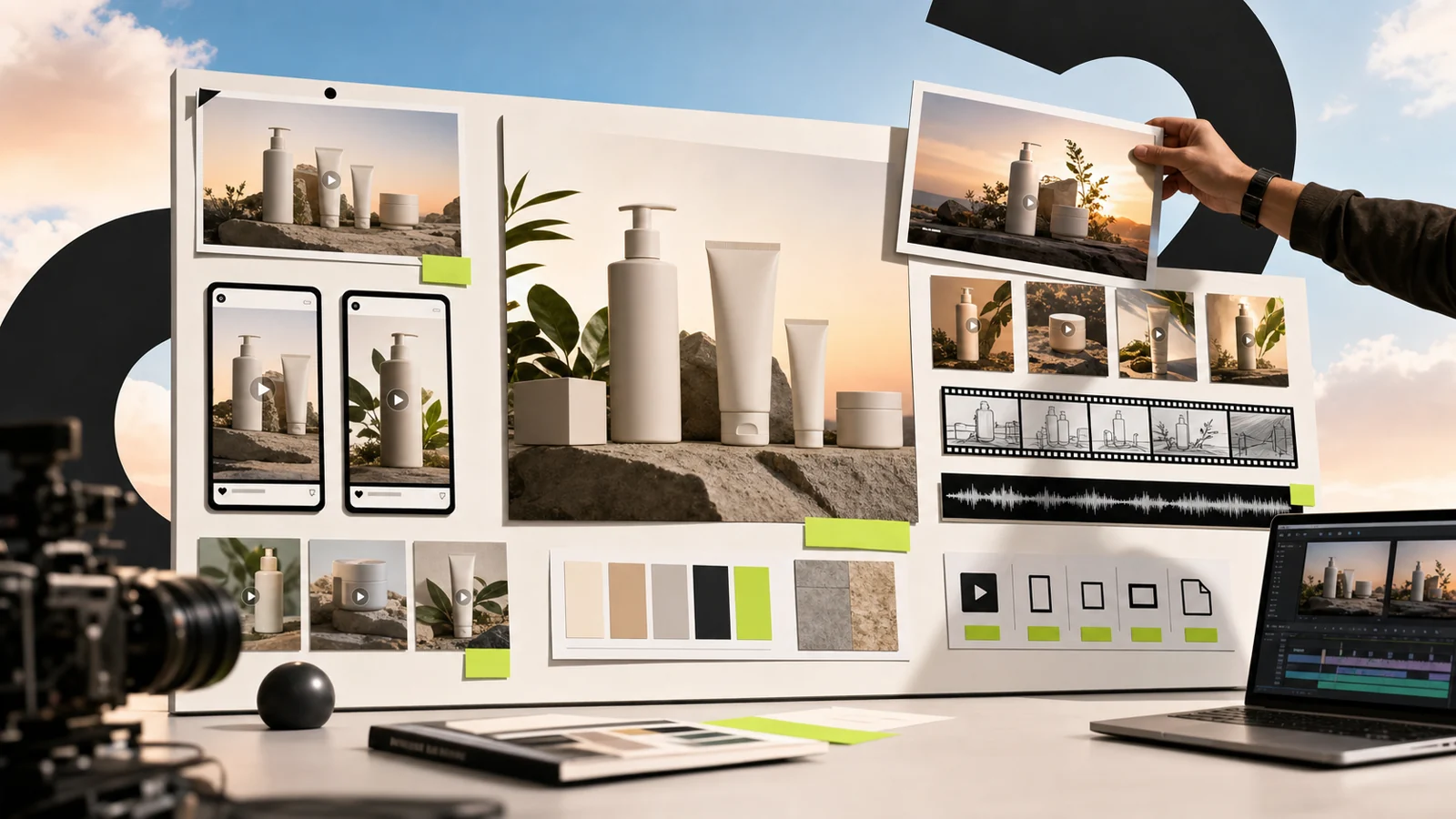
| Source direction | Moodboards, references, shot list, prompt logic. | Helps future assets stay consistent. |
How much does AI video production cost?
AI can reduce some production costs, but it does not make good video free. The budget depends on concept complexity, duration, number of shots, product accuracy, number of deliverables, edit depth, music, voice, sound design, revisions and how much creative direction is needed before production starts.
A simple social ad pack is very different from a cinematic launch film. A product video with one visual world is different from a campaign that needs three concepts, multiple aspect ratios and a full content kit. The smarter budgeting question is: what assets does the campaign need in order to perform?
Budget lens
AI changes where the money goes. Less weight may sit in physical production, but more value sits in direction, selection, editing, sound and final delivery.
How to keep AI video from looking cheap
Most weak AI videos fail because the brand world changes from shot to shot. The product looks different, the lighting shifts, the motion feels strange, the edit has no tension or the ad is more interested in showing AI than selling the idea.
Quality comes from constraints. The team needs a visual bible, approved references, product rules, a shot list, careful selection and a finishing pass. Every generated shot should be treated like footage from a production day: useful, rejected or refined.
- Lock the product. Shape, color, material, packaging and scale need to stay recognizable.
- Control the world. Lighting, palette, environment and camera language need a rule set.
- Edit like advertising. The first seconds need a hook, and the full piece needs rhythm.
- Use sound seriously. Sound design and music can make AI video feel finished instead of synthetic.
- Deliver for each platform. A horizontal hero film and a vertical social ad need different pacing.
How to choose the right AI video production partner
Do not choose a partner only because they can generate impressive frames. Choose the team that can explain how the work will move from brief to final assets. The best signal is process. Ask how they approach concept, references, consistency, editing, revisions and delivery.
A strong AI video company should be able to say no to bad directions, explain tradeoffs and protect the campaign from visual noise. That is the difference between a tool operator and a production partner.
Why Genial Production is a good fit for brand AI video
Genial Production is built for brands that want AI video to feel like campaign work, not a technology demo. We start with advertising thinking: audience, product moment, positioning, visual direction and platform use. Then we use AI production to make the idea faster, bigger and easier to adapt across formats.
Because we come from creative execution, we care about the parts that make video feel finished: composition, pacing, edit rhythm, sound, product readability and final exports. AI is part of the production system. It is not the whole system.
The idea and brand role are set before production starts.
Campaign assets are built to feel connected, not randomly generated.
Hero films, social ads and thumbnails are shaped for where they live.
Edit, sound and delivery get the same attention as image generation.
AI video production FAQ
Is AI video production ready for brand campaigns?
Yes, when the work is directed properly. AI video is strongest when the campaign has a clear brief, a consistent visual world and a team that understands advertising, editing and platform delivery.
How long does an AI video project take?
It depends on scope. A focused social ad pack can move quickly. A premium hero film with multiple scenes, revisions and cutdowns needs more time for direction, generation, selection, edit and finishing.
Can AI video production create content for paid ads?
Yes. AI can be very useful for paid social because it supports more hooks, more versions and more visual routes. The final ads still need strong pacing, clear product moments and platform-specific exports.
What makes an AI video look premium?
Premium AI video usually has a clear concept, controlled visual references, consistent product detail, intentional camera language, strong editing, polished sound and deliverables made for each channel.
Planning a brand video, commercial or social campaign with AI production?
Start a Brief