
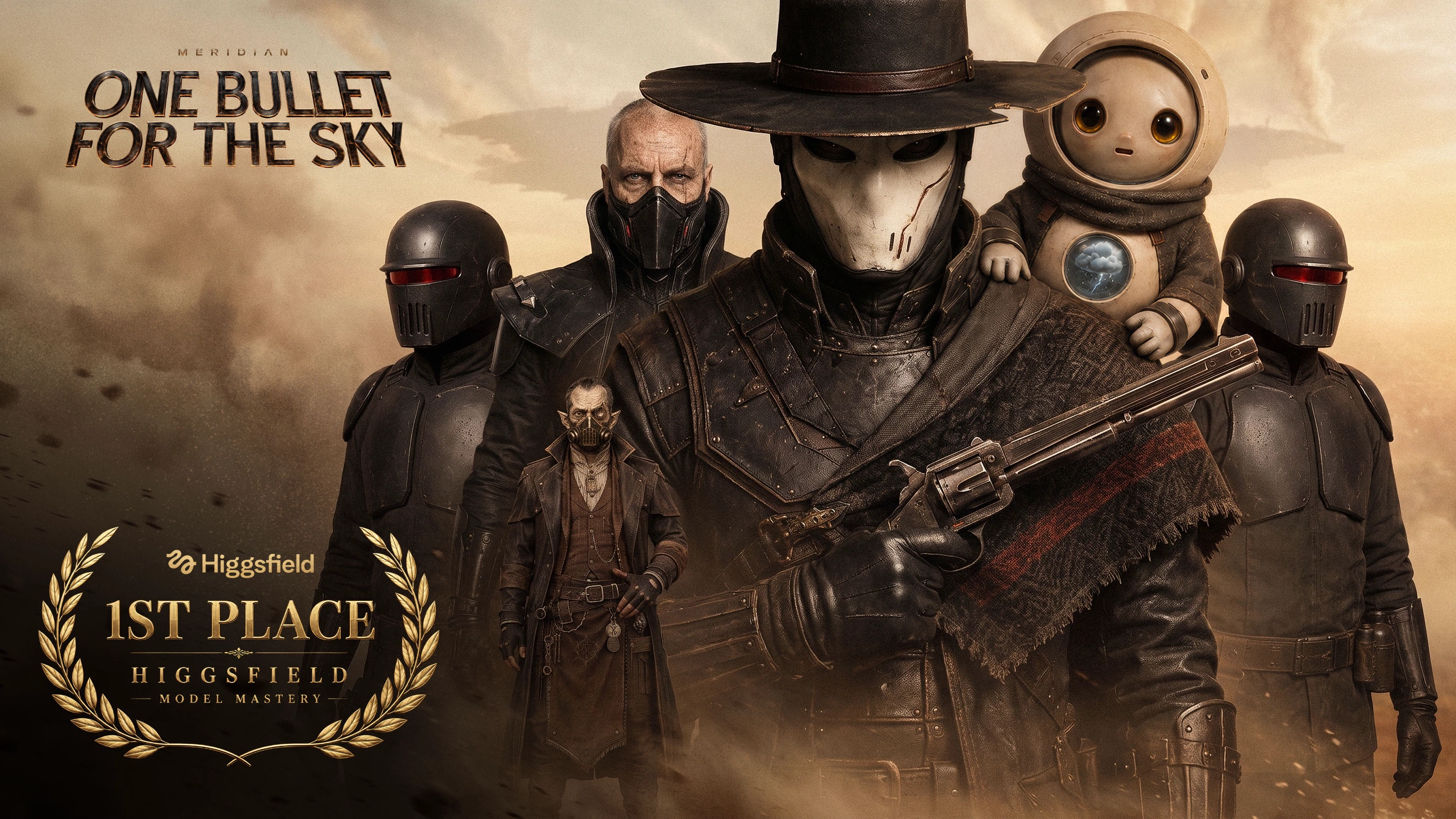

Most AI films do not fall apart because the images are bad. They fall apart because the world changes from shot to shot. Meridian was built as a test of the opposite idea: make the rules first, then let the images move inside those rules.
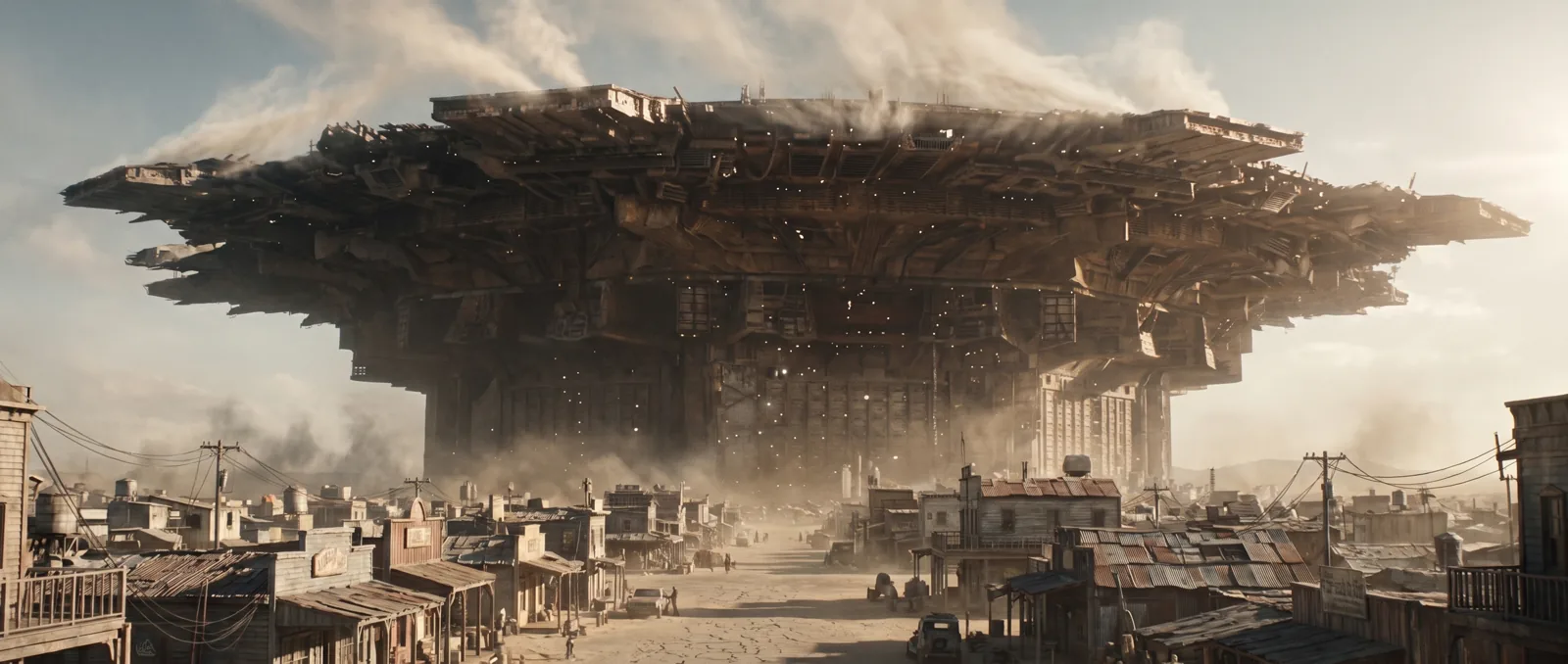
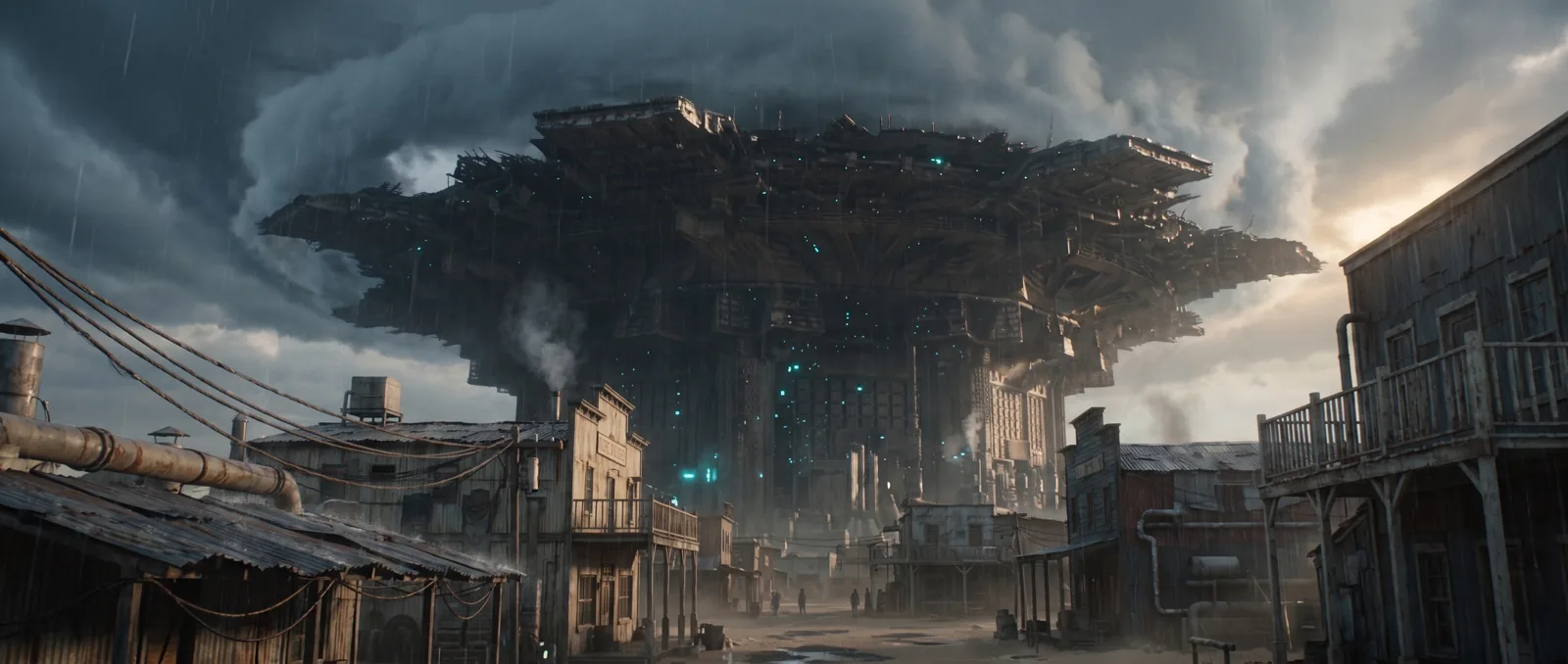
Meridian: One Bullet for the Sky is a short sci-fi Western set on CLNDR-9, a dry frontier planet where Vane Corporation controls water through a colossal Atmospheric Tower. Ash, a feared masked gunslinger, arrives with Morrow, a captive weather child carrying a living storm inside his chest. The film follows one simple moral turn: Ash is hired to deliver Morrow, then chooses to free him instead.
This article breaks down the production system behind the film: the story logic, character references, visual bible, AI model stack, shotlist, prompt contracts, edit decisions and soundtrack context. It is written for filmmakers, agencies and AI creators who want AI video to feel directed rather than assembled from impressive but disconnected generations.
Watch the film first
The finished short works best if you see the structure before reading the breakdown: dry city, saloon entrance, handover, duel, fountain, first rain. This playlist includes the film and the official soundtrack cues in one place.
The story engine: one moral decision, one visual payoff
The film was designed around a single question: what is the smallest action that can change the whole world? The answer became the title. The "one bullet" is not the most violent shot in the film. It is the deliberate blue bolt Ash fires to break Morrow's cuff chain. That choice frees the weather child, and Morrow can finally wake the storm.
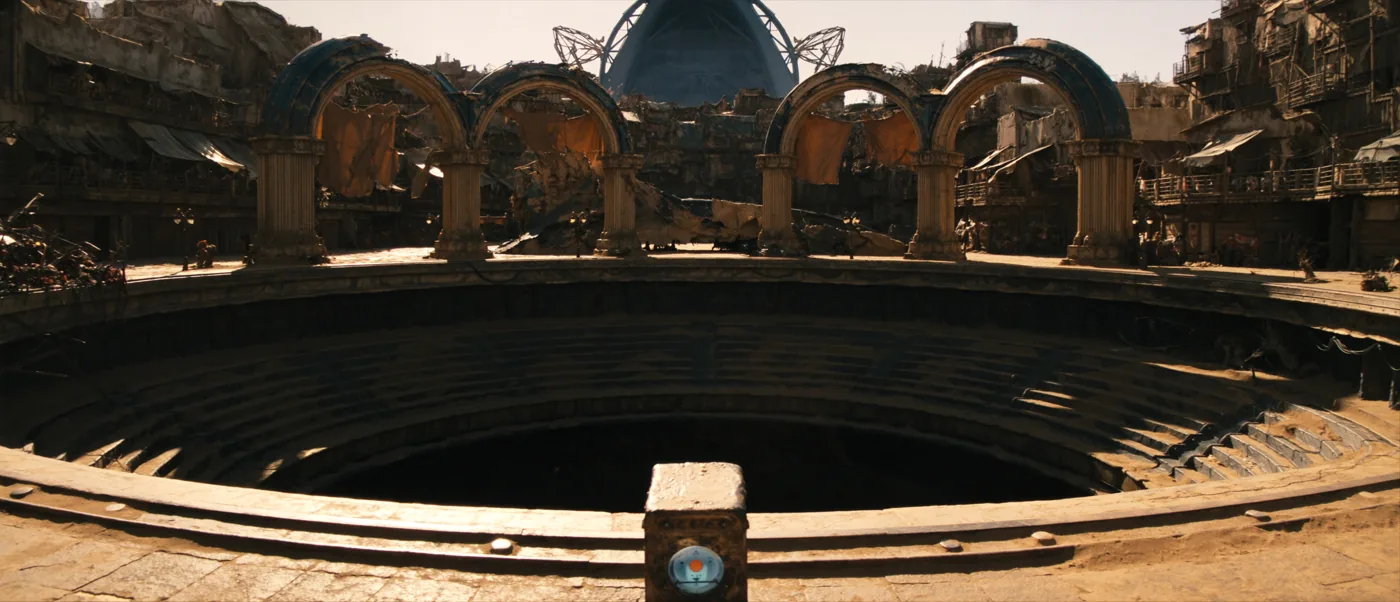
That decision gave every scene a clear job. CLNDR-9 establishes scale and scarcity. The saloon establishes Ash's reputation before he speaks. Vane Corporation establishes the water monopoly and the bounty temptation. The duel forces Ash to choose between payment and mercy. The fountain turns that private choice into a public consequence: first rain.
Core production rule
Every shot had to answer one of three questions: who controls the water, who is afraid of Ash, or why Morrow matters.
The visual bible came before the video prompts
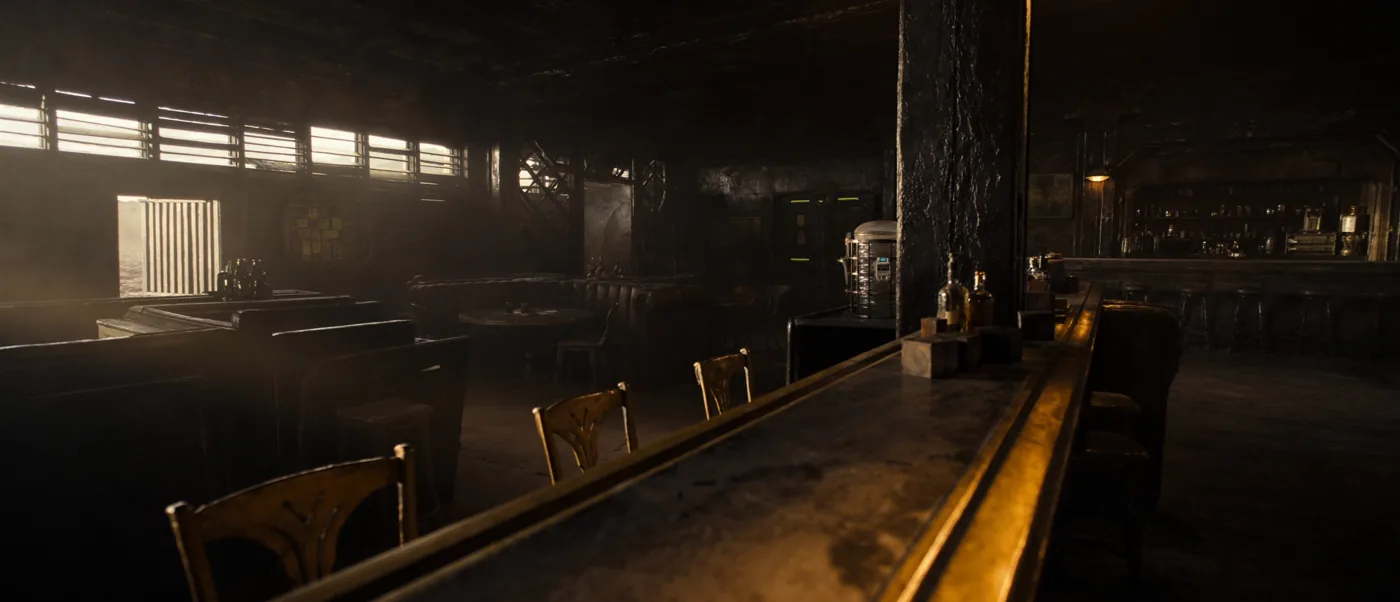
The fastest way to make AI video feel generic is to start with motion before identity. For Meridian, pre-production came first. We defined the cast, locations, props and color rules before building the shotlist.
The universe name is MERIDIAN. This story takes place on CLNDR-9, pronounced "Cylinder Nine". The world is a drought planet, but the drought is not a universal franchise rule. It is specific to this film's conflict: Vane Corporation has turned water into power.
The AI production stack behind Meridian
Meridian was not built by asking one AI model to solve the whole film. The workflow was split into specialized production jobs, so each tool had a clear responsibility and every output could be checked against the visual bible.
Used for character design and identity references, including Ash, Morrow, Vane and the supporting world details that needed to stay recognizable from shot to shot.
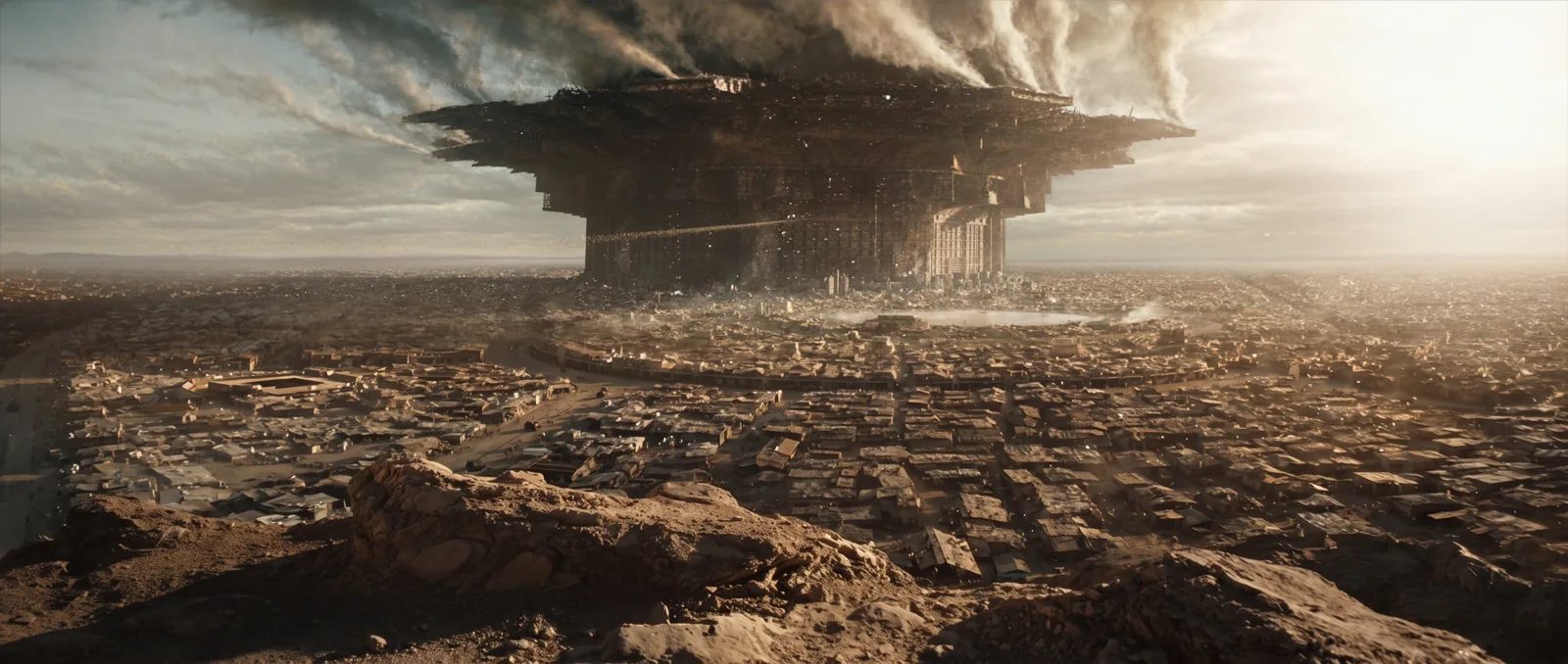
Used to shape cinematic environment references for CLNDR-9, the saloon, the fountain and the Atmospheric Tower before moving into video generation.
Used to generate the film shots from the approved references, shotlist and continuity rules.
Used for visual editing and refinement where frames needed a more controlled finish before the final cut.
Used to organize the prompt system, structure references, maintain continuity notes and turn production decisions into repeatable shot instructions.
This separation mattered because AI filmmaking gets messy when every tool is asked to do every job. Characters, locations, movement, editing and prompt organization each needed their own lane. That made the final film easier to direct, easier to reject when something drifted, and easier to edit into a coherent short.
Character continuity: lock the silhouette before the performance
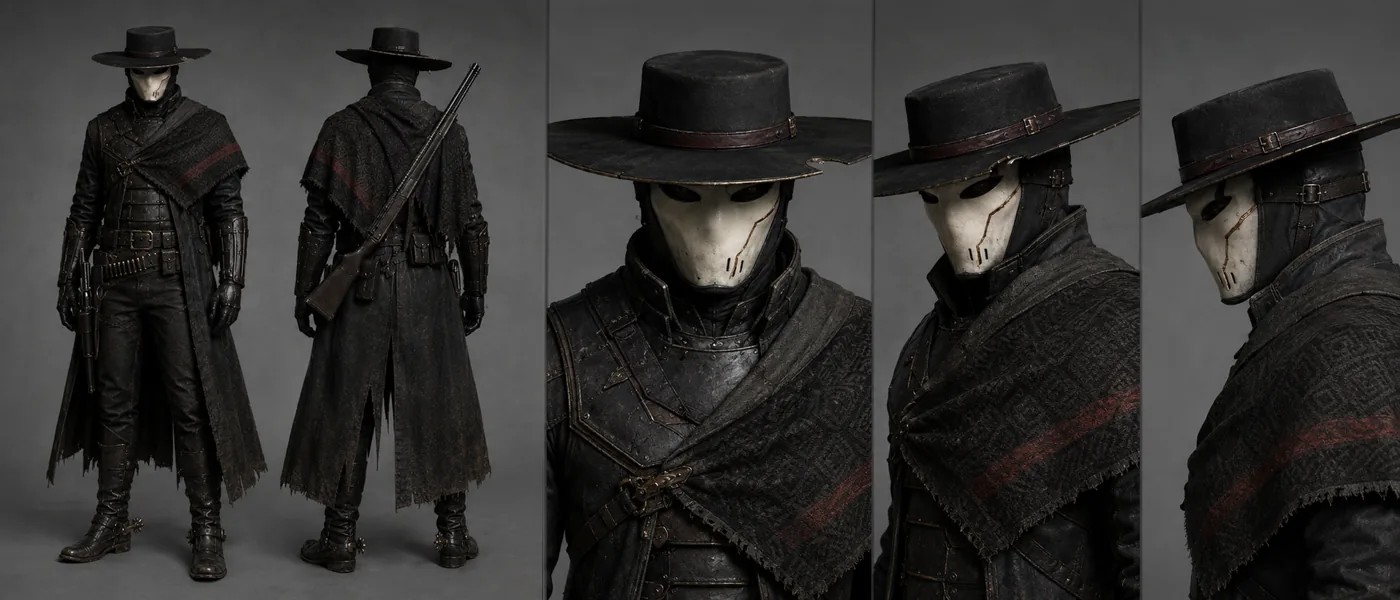
AI video consistency starts with silhouettes. Ash had to be readable even in shadow: wide-brimmed hat, ivory mask, black duster, dark poncho, long revolver. Morrow had to read at child scale, with soft body language, amber eyes and the storm visible through his chest window. Vane needed older authority, a sealed respirator mask, black armor and red accents.
The reference sheets did two jobs. They controlled visible identity, and they gave the edit something to reject. If a shot looked beautiful but broke Ash's mask shape, Morrow's proportions or Vane's red-black hierarchy, it did not belong in the film.

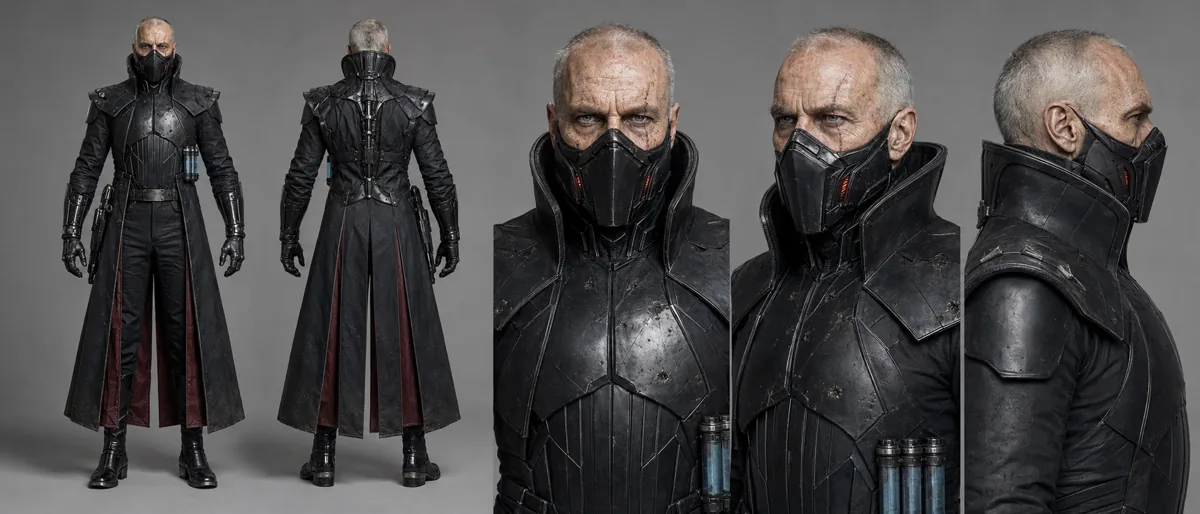
Morrow was especially important. He never speaks words. His meaning comes from eye behavior, head tilts, hands, posture, small baby-like sounds and the storm inside his chest. That constraint kept him emotional without turning him into comic relief.
The shotlist was treated like a production document
The Seedance 2.0 Fast director's shotlist was built as fifteen standalone R2V prompts with scene-specific durations from 4 to 15 seconds. The final shooting script targeted 89 seconds. The production shotlist expanded some beats to protect clarity, then the edit compressed them back into a short film rhythm.
The important part was not the number of prompts. It was the amount of direction inside each one: lens language, camera movement, geography, character placement, voice rules, sound rules and continuity checks.
| Beat | Purpose | Continuity pressure |
|---|---|---|
| City and chopper | Establish Vane's water monopoly at mythic scale. | Keep tower silhouette, dry palette and Ash/Morrow readable in motion. |
| Saloon entrance | Make the room recognize Ash before dialogue starts. | Preserve left-right blocking, masked locals and open negative space. |
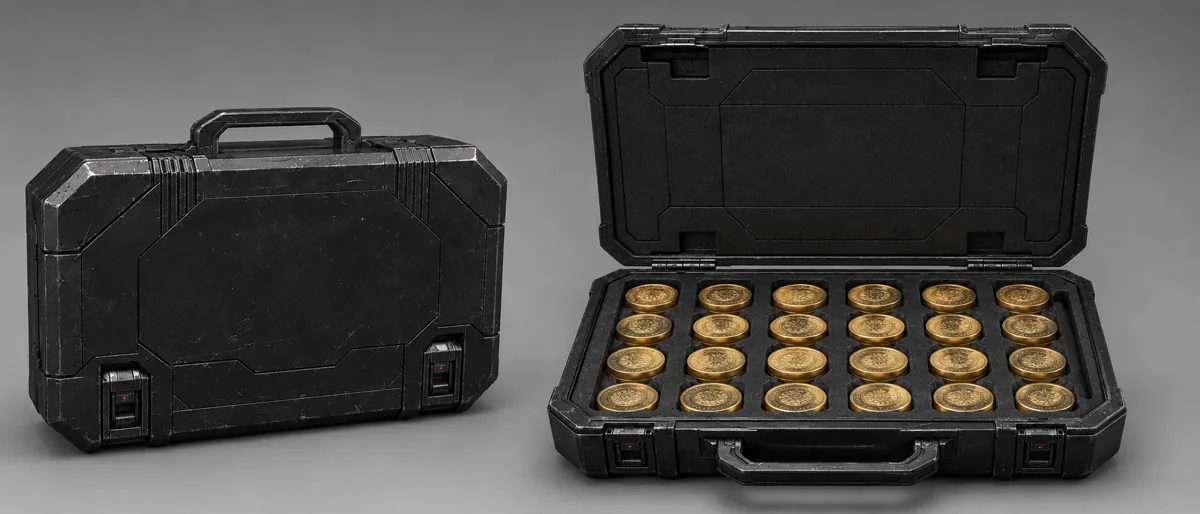
| Handover | Turn Morrow from bounty object into moral test. | Keep Vane, reward case, extraction tool and Morrow's fear legible. |
| Duel | Show Ash's speed, then make Morrow create the opening. | Action had to stay spatially readable, not teleport or become noise. |
| Fountain | Convert private rescue into public weather event. | Keep fountain, tower and Vane Corporation as separate locations. |
| First rain | Pay off the whole film with restraint. | Show first droplets and darkening stone, not flood-level water. |
The prompt contract protected the film from drifting
Each generation used a global visual contract. It defined the project as native ultrawide live-action sci-fi Western, with a large-format cinema look, anamorphic lens language, hard motivated sunlight, deep negative fill, textured blacks and a dry palette. It also set an audio rule: diegetic sound only during generation, no music, no subtitles and no narrator.
That might sound strict, but strictness is what makes the footage editable. If every shot invents its own lens, light, acting style and sound logic, the editor has to hide the differences. If every shot follows the same contract, the editor can focus on rhythm.
Reference sheets controlled costume, masks, props, colors and proportions.
Every cut defined movement, lens feel, focus behavior and screen direction.
Masked characters stayed masked while speaking. Morrow never used words.
Locations stayed separate, the tower was not beside the fountain, and rain remained first rain.
Editing and sound made the AI footage feel intentional
The edit follows Western rhythm: stillness, pressure, one burst of speed, stillness again. Ash does not win because the frame gets louder. He wins because he moves once, precisely, then returns to calm. Morrow's two lightning moments were also separated by purpose. The first pulse interrupts Vane's gravitic control. The second sustained release wakes the fountain and summons the storm.
Music was kept out of the generation prompts so the final soundtrack could be designed after the edit. The complete playlist includes the short film and three official soundtrack cues, allowing the film and score to live together without letting the generator bake music into individual shots.
What this teaches about AI filmmaking
AI video gets stronger when it behaves less like a slot machine and more like production. The strongest prompts in Meridian were not the most poetic. They were the ones that protected geography, identity, camera behavior and story cause-and-effect.
- Start with the ending. The final rain defined what every earlier dry frame needed to prepare.
- Design reusable anchors. Character sheets, props and location references reduced visual drift.
- Make every generation answer a scene problem. The question was never "can this look cool?" It was "what must the audience understand now?"
- Use constraints as creative tools. Morrow's silence, Ash's restraint and Vane's controlled voice made the characters easier to remember.
- Edit for intention. The final film is not a collection of best-looking shots. It is a sequence of decisions.
For brands, the same lesson applies. AI production can create worlds, product films, campaign visuals and social ads faster, but the work still needs direction. The tools can make the image. They cannot decide what the image is for.
AI filmmaking FAQ
How do you keep an AI short film visually consistent?
Build a visual bible before generating video. Lock character silhouettes, wardrobe, key props, locations, color palette, camera language and scene geography. Then reject shots that break those rules, even if they look impressive in isolation.
What was the main workflow behind Meridian?
The workflow moved from story and creative bible to asset references, shotlist, R2V prompts, generated takes, editorial selection, sound design, soundtrack and finishing. The shotlist used scene-specific durations and strict continuity notes so each generated piece could survive the edit.
Why is the film called One Bullet for the Sky?
The title refers to Ash's final deliberate blue shot. Instead of killing Vane, he shoots through Morrow's chain. That single bullet frees the weather child, and freeing Morrow allows the sky to return.
Can this workflow be used for commercials?
Yes. The same system works for AI commercials, product worlds and campaign films: define the idea, build a reference bible, plan the shots, protect consistency and edit toward a clear emotional payoff.
Need an AI film, campaign or visual world that feels directed, not randomly generated?
Start a Brief